LemonTrades

TL;DR
- Walking Liberty halves were made from 1916 to 1947, all 90% silver with 0.3617 troy ounces. Melt value is live below.
- Common 1940s dates in worn condition sell for a little over melt.
- Key dates such as 1921, 1921-D, 1921-S, 1916-S and 1938-D are worth much more, even when worn.
- LemonTrades follows the silver price for you, with alerts on sharp moves and the likely cause.
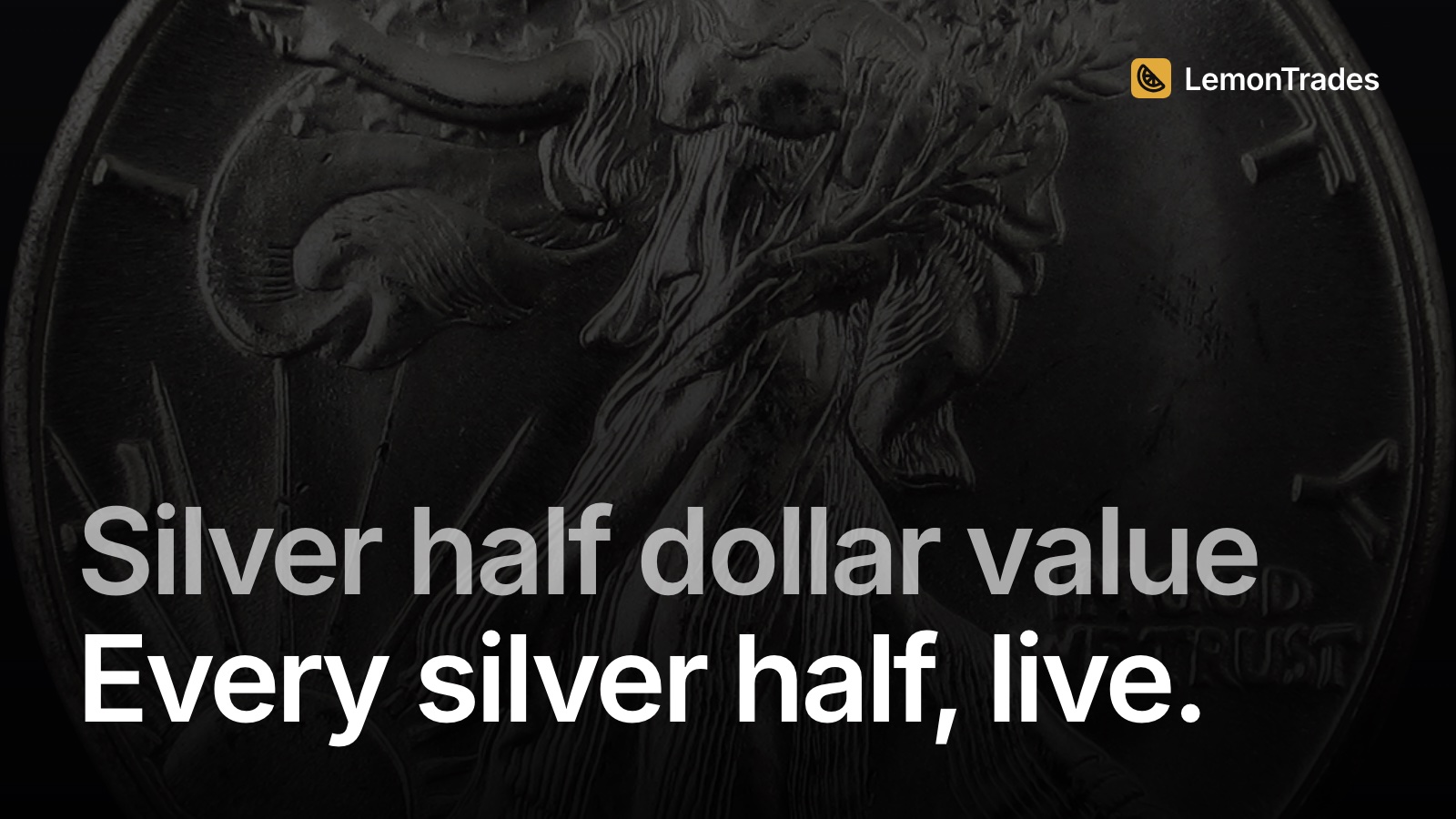
Liberty striding toward the sun, draped in a flag: the design was so admired that it now appears on the American Silver Eagle.
Key and scarce dates
| Date | Why it’s scarce |
|---|---|
| 1916-S | First-year coin from San Francisco |
| 1921 | Low mintage after a slump in demand |
| 1921-D | The lowest mintage of the series |
| 1921-S | Low mintage, and very rare uncirculated |
| 1938-D | The lowest mintage of the later years |
Finding the mint mark
On 1916 and some 1917 coins, the mint mark is on the front, below “IN GOD WE TRUST.” From later in 1917, it’s on the back, at the lower left near the rim. No mark means Philadelphia.
The common years
Coins from 1941 to 1947 were made in large numbers and are the easiest to find. They sell close to melt when worn, and for more with full detail on Liberty’s hand and the lines of her skirt.
Condition matters most: a worn coin and a sharp, uncirculated one of the same date can differ by ten times or more. Look for wear on the highest points of the design, and never clean a coin you might sell; cleaning cuts its value.
Selling
To sell, compare offers from two or three coin dealers, or have a valuable coin graded by PCGS or NGC first. Bulk common coins sell close to melt value: see junk silver. Is it real? See is silver magnetic.
Other halves: silver half dollar value and the 1964 Kennedy half.
Sources
Education, not financial advice. Collector values vary with condition and demand; get a valuable coin checked by a reputable dealer or grading service. See our disclaimer.