LemonTrades
TL;DR
- Quant trading means trading with rules built from math, statistics and data, usually run by computers instead of a person’s judgment.
- The main strategies: trend following, mean reversion, statistical arbitrage, market making and factor investing.
- Most strategies that look great in a backtest fail live, because of overfitting, hidden biases and trading costs.
- LemonTrades uses AI to read and score the news for your markets, the kind of signal quant funds pay for, explained in plain words.
Quant (short for quantitative) trading replaces gut feel with models: a rule says when to buy, when to sell and how much, and a computer follows it. Here’s how it works.
What is quant trading?
A quant trader looks for patterns in data, like prices, volume, company results or news, tests whether they would have made money in the past, and turns the ones that hold up into rules. Those rules are usually run by algorithms, so “quant trading” and “algorithmic trading” are often used together, though not every algorithm is a quant strategy; many just split big orders into small ones.
The main quant strategies
| Strategy | The idea | Typical holding time |
|---|---|---|
| Trend following | Buy what’s rising, sell what’s falling, across futures markets | Weeks to months |
| Mean reversion | Bet that a stretched price snaps back toward its average | Hours to days |
| Statistical arbitrage | Trade pairs or baskets that usually move together when they drift apart | Minutes to days |
| Market making | Post bids and offers all day and earn the spread | Seconds |
| Factor investing | Tilt toward traits that have paid over time: value, momentum, quality | Months |
| Event and news | Trade on earnings, data releases or the tone of headlines | Seconds to days |
The famous quant firms
- Renaissance Technologies, founded by mathematician Jim Simons. Its Medallion fund, open only to employees, is widely reported to have returned about 66% a year before fees from 1988 to 2018.
- Two Sigma, D. E. Shaw and Citadel, large hedge funds that run quant strategies alongside others.
- Jane Street, Citadel Securities and Jump Trading, trading firms that make markets in stocks, options, ETFs and futures.
Why most backtests lie
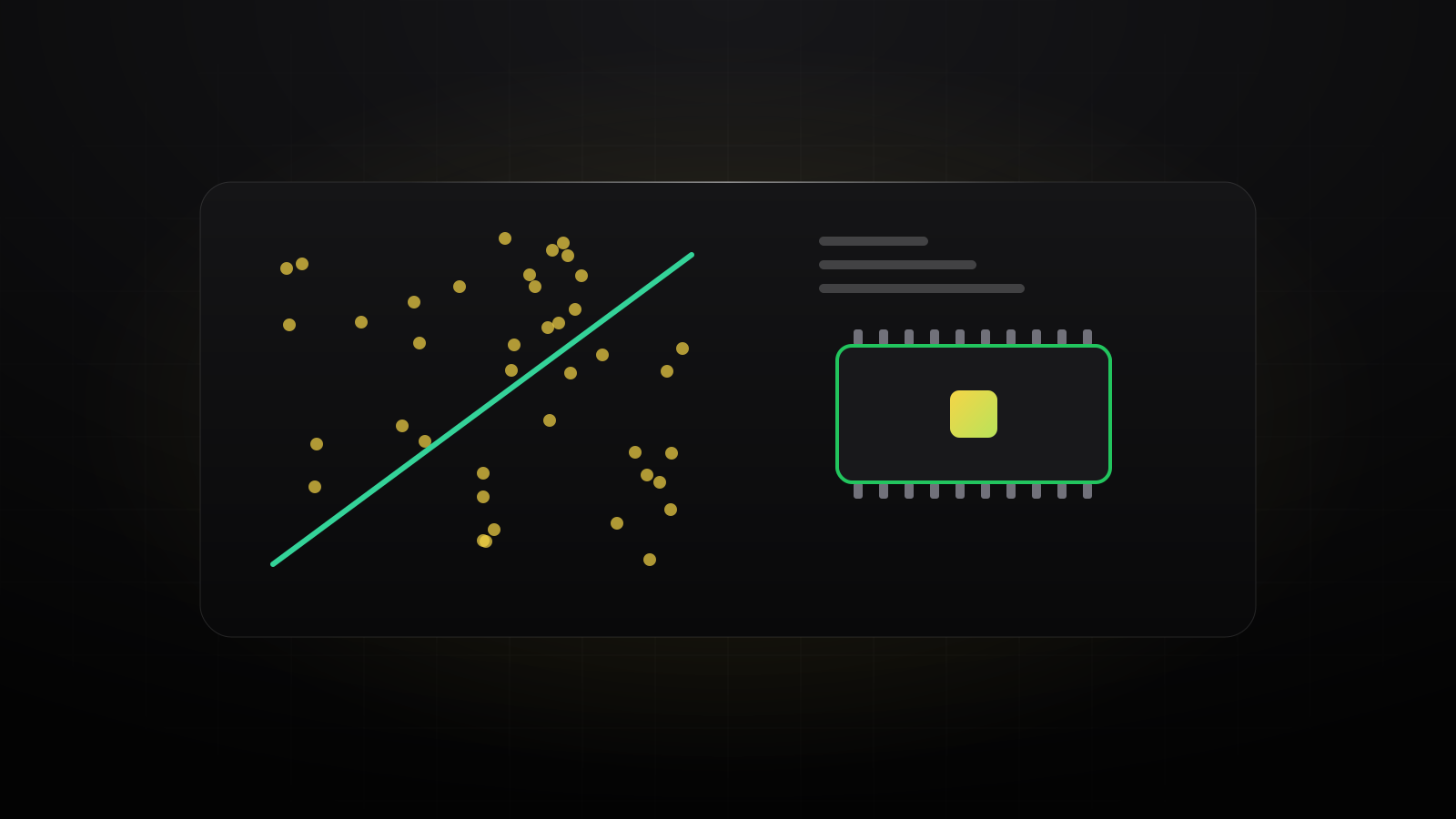
- Overfitting: tune enough settings and any strategy fits the past perfectly, then fails on new data.
- Look-ahead bias: using data the strategy couldn’t have known at the time, like a revised GDP number.
- Survivorship bias: testing only on stocks that still exist, leaving out the ones that went bust.
- Costs and slippage: a strategy that trades often can turn from profit to loss once spreads and fees are counted.
How to start quant trading
- Learn the basics: statistics, probability and a programming language, usually Python.
- Get clean data: daily prices are free from many sources; intraday data usually costs money.
- Backtest simple ideas, include costs, and keep some data aside to test on at the end.
- Paper trade it live before risking money. See what is paper trading.
- Start small, and compare the results with the backtest.
Quant firms hire mainly mathematicians, physicists and computer scientists; see what traders earn in commodity trader salaries.
News as data
One growing area is reading text: models that score headlines and reports for how much they matter to a market. That’s what the LemonTrades desk does for the markets you follow, with a plain-words reason for every score instead of a black box. See how the desk reads the news.
Sources
- SEC: Staff Report on Algorithmic Trading in US Capital Markets
- Wikipedia: Renaissance Technologies
- Wikipedia: Quantitative analysis in finance
Education, not financial advice. See our disclaimer.