LemonTrades
Gold is one of the most traded markets in the world, and one of the most driven by news. That makes it a good market to learn, as long as you respect how fast it can move.
1. Pick how you’ll trade it
“Gold” on a chart is usually XAUUSD: the price of one troy ounce in US dollars (here’s the live gold price). You can’t buy that number directly, so you pick something that follows it:
- Gold ETFs. Funds like GLD and IAU hold physical gold and trade like a stock (how gold ETFs work). There’s no leverage unless you add it, which makes them the simplest place to start.
- Futures. Gold futures trade on COMEX. A standard contract is 100 ounces, so every $1 move in gold is $100. Micro gold futures are 10 ounces, or $10 per $1 move, which suits smaller accounts.
- Spot gold through a broker. Outside the US, most forex brokers offer XAUUSD as a CFD, with leverage. In the US, CFDs aren’t allowed for retail traders.
- Mining stocks. They follow gold, plus their own business risk, and usually swing more than gold itself.
Leverage cuts both ways: it makes small moves pay, and it makes small moves hurt. If you’re new, start with an ETF or a single micro contract, or practice first in our free trade simulator.
2. Know when gold moves
Gold trades almost around the clock, from Sunday evening to Friday at 5:00 PM ET, with a short break each afternoon. But it isn’t busy all day:
- Asia (evening, New York time): usually the quietest stretch.
- London (from about 3:00 AM ET): volume picks up. The LBMA gold price, a benchmark used around the world, is set at 10:30 AM and 3:00 PM London time.
- New York (8:00 AM to noon ET): the busiest hours. London and New York overlap, and most US data comes out at 8:30.
A lot of beginners lose money in the quiet hours, chasing small moves that go nowhere. The cleanest moves usually come during London and New York.
3. Learn what moves it
Gold reacts to a short list of things: real interest rates, the Fed, the dollar, fear, big buyers like central banks, and inflation. We explain each one in Why is gold going up? In practice, that means watching:
- The 10-year Treasury yield and the Dollar Index (DXY). When both fall, gold usually rises.
- The economic calendar, above all:
- CPI (inflation): monthly, at 8:30 AM ET.
- The jobs report (nonfarm payrolls): usually the first Friday of the month, at 8:30 AM ET.
- Fed rate decisions: eight a year, at 2:00 PM ET.
- PCE inflation and GDP.
- Headlines: wars, oil, tariffs and central bank buying.
4. Treat big data releases with care
On a CPI or jobs morning, gold can move more in one minute than it did all night. Spreads widen, prices jump, and stop orders can fill worse than the price you set.
Traders usually handle it one of three ways:
- Step aside: be out before the release, and trade once the first move settles.
- Size down: hold through it only with a position small enough that the worst case is fine.
- Trade the reaction: let the first 15 minutes play out, then trade a break of that range.
Whichever you choose, know the time of every release before you place a trade.
5. Plan the trade before you place it
Before you enter, write down three numbers:
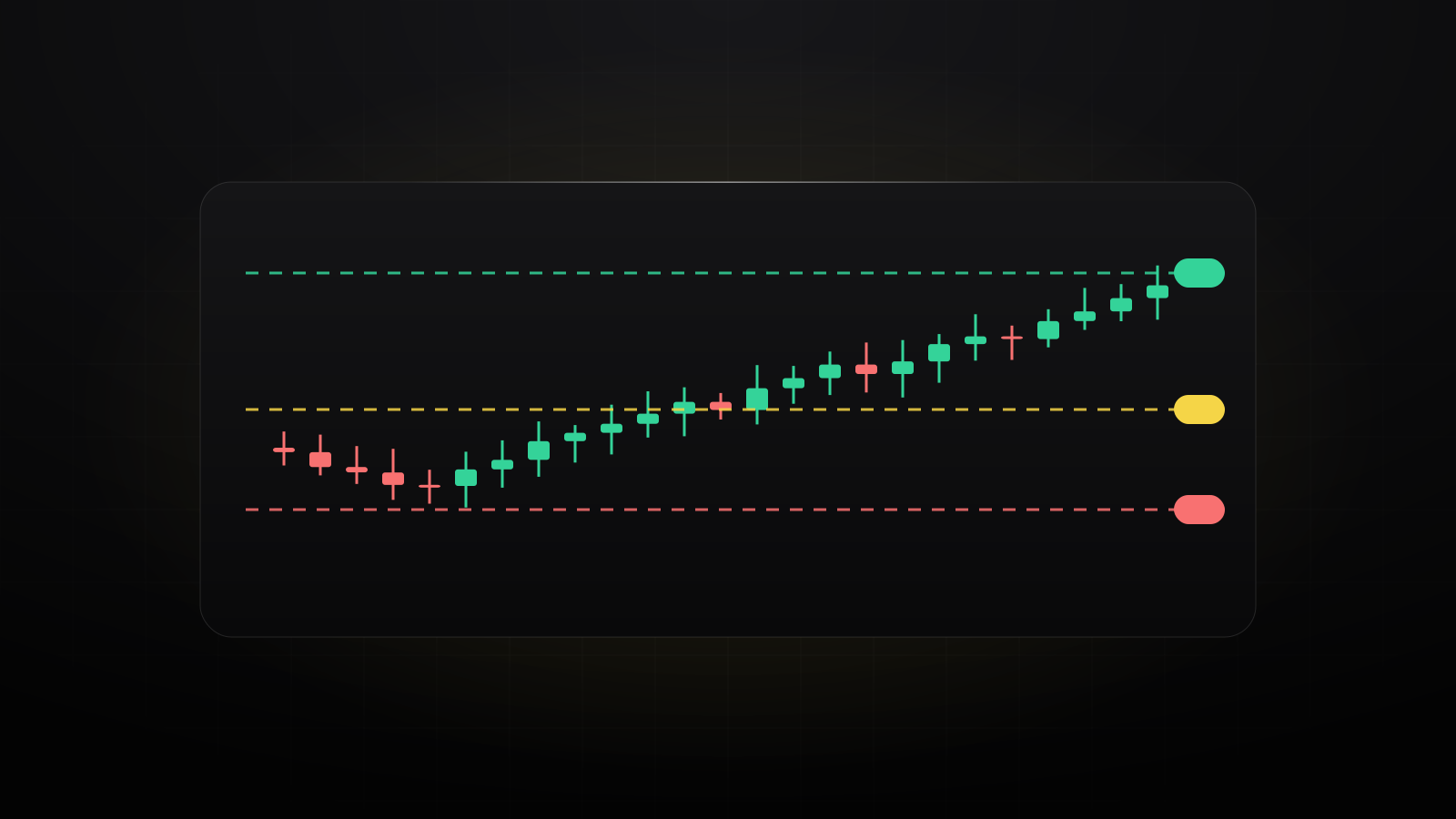
- Entry: where you get in, and why. For example, a break above yesterday’s high, or a bounce off support.
- Stop: where you’re wrong. Put it past a real level on the chart, not at whatever dollar amount you can stomach.
- Target: where you take profit. If the target isn’t at least as far away as the stop, the trade usually isn’t worth taking.
Then size the position from the stop. A common rule is to risk no more than 1% of your account on one trade. On a $10,000 account, that’s $100. If your stop is $10 away on micro gold futures ($10 per $1 move), one contract risks exactly $100.
The levels that matter most are the obvious ones, because everyone is watching them: yesterday’s high and low, this week’s high and low, and round numbers, where gold often stalls.

- Resistance at 4,181 (yesterday’s high), then the 5-day high at 4,226.
- CPI is out at 8:30 AM. A hot core number is the main risk to the bias.
6. Keep a journal
Write down every trade: why you took it, where the stop was, what happened, and what news hit. After 20 or 30 trades you’ll see your own patterns, like losing on data days or closing winners too early.
Beginner mistakes to avoid
- Using too much leverage.
- Jumping in during the first seconds after CPI or the jobs report.
- Watching the gold chart but ignoring the dollar and yields.
- Moving your stop further away when the trade goes against you.
- Trading the quiet hours out of boredom.
This guide is education, not financial advice. Trading is risky and you can lose money, and with leverage you can lose it fast. See our disclaimer.