LemonTrades
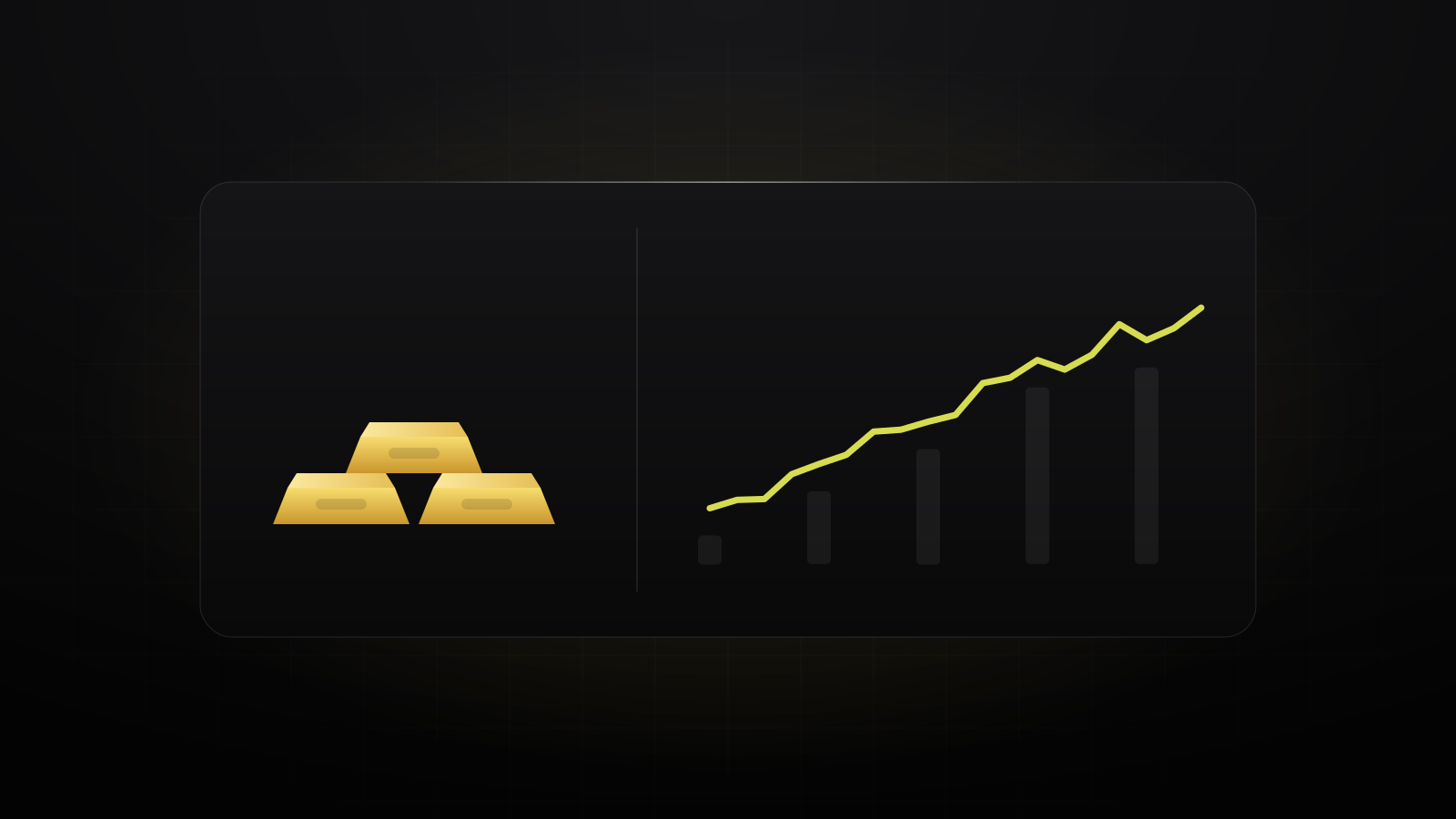
A gold ETF lets you own gold the way you own a stock: one click in a brokerage account, no vault, no dealer. Here’s what’s inside one, and how to pick between them.
What a gold ETF is
An ETF (exchange-traded fund) is a fund whose shares trade on a stock exchange. A physically backed gold ETF uses investors’ money to buy gold bars and keeps them in a vault. Each share is a slice of that gold, so the share price rises and falls with the price of gold.
The first US gold ETF, SPDR Gold Shares (GLD), launched in November 2004. Today gold ETFs are the most common way to hold gold in a brokerage or retirement account.
How the price follows gold
Each share stands for a fixed amount of gold. The fund pays its yearly fee by selling a tiny bit of gold, so that amount shrinks slowly over time. That’s why a gold ETF trails the gold price by roughly its fee each year.
Large trading firms keep the share price close to the value of the gold behind it: when shares trade above that value they create new shares, and when they trade below it they redeem shares for gold. You can see how much gold one share holds right now on our gold stock price page.
The main US gold ETFs
All four hold gold bars. They differ mostly in cost and in how much they trade:
- GLD (SPDR Gold Shares): the largest and most traded, with a busy options market. Yearly fee 0.40%.
- IAU (iShares Gold Trust): very large and liquid, with a lower fee of 0.25%.
- GLDM (SPDR Gold MiniShares): a fee of 0.10% and a much lower price per share.
- SGOL (abrdn Physical Gold Shares): a fee of 0.17%.
Fees are as of this writing and can change, so check each fund’s website. Live prices for GLD, IAU and GLDM are on the gold stock price page.
Not every “gold ETF” holds gold
- Gold mining ETFs like GDX hold shares in mining companies. They usually move more than gold, in both directions, and carry company risk: costs, debt, strikes, a bad mine.
- Futures-based funds hold gold futures instead of bars, and lose or gain a little each time they roll into the next contract.
- Leveraged and inverse ETFs aim for 2x, 3x or −1x gold’s move each day. Over weeks they can end up far from 2x gold’s move, so they’re built for short-term trading, not holding.
- Outside the US, similar products are often called ETCs (exchange-traded commodities), and many hold physical gold too.
ETF, bars, futures or miners?
- Gold ETF: cheap to buy and sell, a small yearly fee, nothing to store. Trades during US market hours. You own fund shares, not the metal.
- Bars and coins: you hold the gold, with no yearly fee, but you pay a dealer premium when you buy, get a bit under spot when you sell, and have to store and insure it. See our guide to gold bullion.
- Gold futures: almost 24-hour trading and built-in leverage, which cuts both ways. Contracts expire, so you have to roll them.
- Mining stocks: a bet on companies as well as gold. Some pay dividends; all can move very differently from gold.
Taxes in the US
The IRS treats physically backed gold ETFs like gold itself: as collectibles. Long-term gains (held more than a year) are taxed at up to 28%, instead of the usual 15% or 20% for stocks. Short-term gains are taxed as ordinary income. Inside an IRA, the usual retirement account rules apply instead. This isn’t tax advice, so check with a tax professional.
How to pick one
- Check what it holds. Gold bars, futures or miners? The fund’s fact sheet says.
- Compare the yearly fee. On $10,000 held for a year, a 0.40% fee is $40 and a 0.10% fee is $10. Over a decade that adds up.
- Look at trading volume. Busy funds have tighter spreads between the buy and sell price. If you trade options, GLD has the deepest market.
- Consider the share price. A lower price per share makes small, regular purchases easier, though fractional shares make this matter less.
- Size and issuer. Large funds from established issuers are less likely to close.
What moves a gold ETF
The same things that move gold: real interest rates, the Fed, the dollar, fear and big buyers. See Why is gold going up? and Why is gold dropping?
One thing is different. Gold trades almost around the clock, but US ETFs trade from 9:30 AM to 4:00 PM ET. If gold jumps overnight on a headline from Asia or Europe, your ETF opens higher, and there’s no way to trade it before the bell.
Education, not financial advice. ETFs can lose value, and past performance doesn’t predict future returns. See our disclaimer.